
Karen Hollis | Nov 8, 2026 Remembrance/Affirm Sunday
Psalm 78:1-7 Give heed to my teachings, O my people, turn your ears to the words of my mouth. I will open my mouth in a parable; I will reveal the hidden meaning of things in the past. What we have heard and known, what our parents have told us, we will not hide from their grandchildren But declare to the next generation the testimony that you gave to Jacob and the law you appointed in Israel, which you commanded them to teach to their children. The next generation might know them, children yet unborn, and these in turn should arise, and tell their children. That they should put their trust in you, and not forget your great deeds, but keep all your commandments.
Let us pray . . . May the words of my mouth and the meditations of all our hearts be reflections of your word to us today, in Christ’s name we pray. Amen
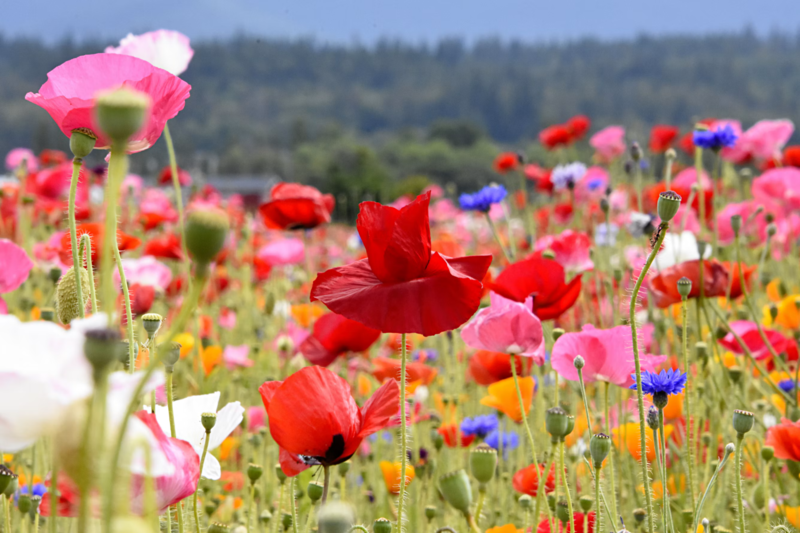
Every year as November 11 draws near, we see poppies appear on people’s jackets, just a few at first, but as the days pass, more and more appear. We put on our own, maybe we give a donation to the poppy campaign, and we gather around the cenotaph . . . to remember.
When we remember in this way year after year, when our remembering includes action, we also teach. We teach people who are new to this country, those who don’t come from military families and have no direct connection to the history, and we teach our children that this matters. We remember the cost to war and armed conflict, and those who showed up and continue to show up.
This kind of remembering, remembering as an active practice, is a huge part of the Jewish identity. As this morning’s psalm proclaims, one of the most important pieces of remembering is teaching the next generation. This is seen most explicitly at the Passover Seder, when a child asks: “why is this night different from every other night?” Through the liturgy, in words and actions, the answers unfold about how God partnered with them to liberate them from slavery. This is what happened, and this is what we do to remember it.
We could ask the same question of November 11. Why is that day different from every other day? Perhaps in our answer we remember it is the day the fighting stopped. On that day we were no longer a people at war. We could stop being vigilant, we gave thanks, we refocused our attention, and paused to remember those who were lost along the way. Over time we have reflected, laid wreaths, and told stories. November 11 is an anniversary and is symbolic of something larger. So, every year on that day, we pause and remember . . . there is so much to remember. There is more to remember than one question can reveal to us . . . so perhaps it serves us well to look through some different lenses.
We could look through a family lens to see how the generations before us served over time; we could look through a Canadian lens to see what is particular about this country; we could look through a personal lens, everyone’s context is different, everyone’s story is unique; we could look through the lens of difficult choices paired with loss - when it comes to armed conflicts, everyone loses something; we could look through a lens of the margins at stories of women, Indigenous, people of colour, the queer community.
Members of the queer community have had to make some very hard choices, including ones around living as their full selves and answering a call to serve. Their stories are countless, most of which are lost to history. Only traces are found in official records, mainly courts martial transcripts.1
Some queer service members actually found ways of hiding in plain sight. According to Veteran Affairs, during WWI and WWII, “male actors often dressed in drag during shows that army entertainers gave for soldiers.” Ross Hamilton was part of a famous troupe. He was a beautiful singer, and since he could sing in a high falsetto voice, he played a female character on stage named Marjorie. He made his first outfits from tent canvas, old curtains, pillow feathers and rosary beads. Hamilton was so popular he had to change out of costume before going back to the barracks for fear of being mobbed by fans.2 Hamilton was able to hide in the spotlight, because at that time drag was not closely associated with the queer community. He was simply considered an entertainer, so for many years his true self was able to shine in a way without being noticed.
As we continue to lean into remembrance as a practice, year after year, what is important for you to remember? What are the stories you’re curious about? What would you like to heal or transform? What do you need to teach your children, grand-children, and great-grand-children about who we are and how we got here? What is important to you about how you remember and what is missing?
However we do it, collectively or individually, we remember because it’s important. Not only the primary stories, but all the stories known and the ones we will never know. The personal stories bring the history to life, and perhaps make us think about our own, about how we respond when the world goes sideways, how we choose to live. And that’s why we teach our children, isn’t it? To give them a foundation on which they can make their own choices. How will you live, given everything you’ve inherited, everything that is activated and in flux in the world today? It seems like a lot to put on a young person . . . but that’s why we teach them, not just the stories of the past, but how to access their inner resources, their resilience, and the presence of God, who accompanies and guides along the way. Amen.
1 https://www.veterans.gc.ca/en/remembrance/people-and-stories/pride-service