
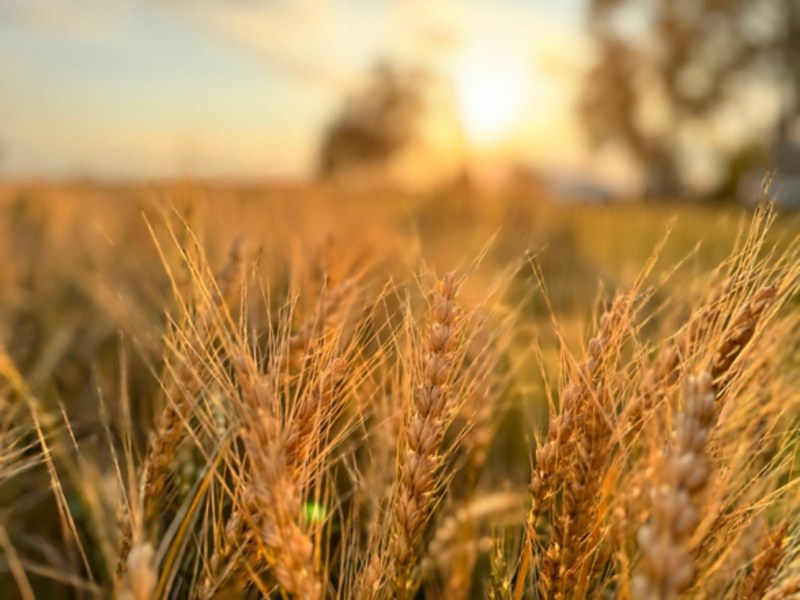
Mark Weesner on unsplash
Karen Hollis | July 19, 2026 8th Sunday after Pentecost
Psalm 139 O God, you have searched me and known me. You know when I sit down and rise up, you discern my thoughts from afar. You discern my path and the places I rest; you are familiar with all my ways. Before a word is on my tongue, you know it, O God, completely. You guard me from behind and before, and lay your hand upon me. It is beyond my knowledge, it is a mystery; I cannot fathom it. Where can I escape from your spirit? Where can I flee from your presence? If I ascend to heaven, you are there. If I lie down in the grave, you are even there. If I take wing with the dawn and alight at the sea’s farthest limits, There also you hand will be guiding me, your powerful hand holding me fast. If I say, “Let the darkness cover me and my day be turned to night,” Even darkness is not dark to you: the night is as bright as the day, for darkness is as light to you. How deep your designs are to me, O God. How great their number! I try to count them but they are more than the sand. I come to the end – I am still with you. Search me, O God, and know my heart Test me and know my thoughts. Watch closely, lest I follow a path of error. And guide me in the everlasting way.
Thomas 57 Jesus said: “The realm of the Father compares to someone who had good seed. His enemy came in the night. He sowed a weed amid the good seed. The man did not permit them to pull up the weed. He said to them: ‘When you pull up the weed you may also pull up the good seed. On the day of the harvest the weeds will be visible. Then you pull them up and burn them.’” (Open Bible translation)
Matthew 13:23-30 Here is another story Jesus told: “The Kingdom of Heaven is like a farmer who planted good seed in his field. But that night as the workers slept, his enemy came and planted weeds among the wheat, then slipped away. When the crop began to grow and produce grain, the weeds also grew. “The farmer’s workers went to him and said, ‘Sir, the field where you planted that good seed is full of weeds! Where did they come from?’ “An enemy has done this!’ the farmer exclaimed. “Should we pull out the weeds?’ they asked. “No,’ he replied, ‘you’ll uproot the wheat if you do. Let both grow together until the harvest. Then I will tell the harvesters to sort out the weeds, tie them into bundles, and burn them, and to put the wheat in the barn.’”
Let us pray . . . May the words of my mouth and the meditations of all our hearts be reflections of your word to us today, in Christ’s name we pray. Amen
In the spring I was on the hunt for mature plantain seeds . . . not banana like plantains, but the leafy green herb that is abundant in our lawns and beside paths. Plantain is a known remedy for bee stings, and I am allergic, not epi pen allergic, but compromised for a week allergic. The trouble with harvesting the plantain growing in my neighbourhood is there is also an abundance dogs who, you know, do their business. So I harvested some mature seed and sowed them in a pot on my balcony. After a few days, sprouts started to come up, but they were clearly 2 different types of plants in roughly equal numbers. Who has been sowing weeds in my planter? Oh, right, it was me! I remembered shaking out some fabric on the balcony that had some old seeds in it. The enemy in the night was me! Hmmm, how often does that happen? After I figured out which was which, I carefully tried to pull up the ones I didn’t want, but every time I pulled, a big clump of soil would come up with it, disturbing all of the sprouts around it. I stopped and thought about what to do. Do I physically hold down the soil as I pull up the tiny weeds? Or do I wait until the ones I want are big enough to withstand the weeding? But even then, all of the plants will be bigger, and pulling up the weeds will disturb more soil. I want what I have sown to be able to grow well so that I can benefit from its medicine. So, how do I proceed?
This is the world of the parable. Parables are often short stories that are set in everyday life. Growing and planting is a setting that continues to resonate through the centuries as we cultivate and tend our garden beds and patio pots. But in parables, these relatable scenarios also come with a twist. Who would identify a weed and then continue to allow it to grow? We pull up weeds because they take up space, cast shadows on foliage that needs light, and absorb nutrients intended for our flowers and vegetables. What is the value in allowing their continued growth?
We might hear this story and wonder, huh, what God is trying to tell us. Or we might go through the verses trying to figure out which character is Jesus. Perhaps we open ourselves to the Holy Spirit, who is always with us, inviting us into reflection. It’s kind of how we’ve been trained in the church to engage with scripture.
Something else happens with parables, all kinds of parables . . . and that is perhaps why Jesus used them. Jesus got the attention of all these people and invited some to follow him and learn from him. He was offering a kind of formation program where he was trying to awaken his followers to the kindom of God, to the holy presence within them, and the possibilities for a new reality for all. He invites them into self-reflection by teaching in parables, because parables are different . . . parables interpret us. Rather than us interpreting them, or us interpreting God, the parable interprets us. It’s like God hangs out inside the parable, searching for us.
The Psalmist prays: Oh God you have searched me and known me. Where can I escape from your spirit? Where can I flee from your presence? Not on a high mountain nor on the far side of the moon. You find us, O God, even within the text.
There is often a moment in the parable that catches in us, maybe it bugs us or irritates us, or it’s unsettling, or it’s just puzzling or maybe it’s just the opposite, maybe there’s a moment that is difficult to connect with. That reaction or response to what is unexpected tells us something about us. God finds us in these moments and says, I see you, I love you, I am for you. So, there, in the container of the story that is both familiar and a little off, God offers the content of the story as a mirror, that we might experience it and see where we are today, in this season, or how we’re responding to the stuff of the world.
God is never insisting or forcing, only invites us into the cycle of renewal that is foundational to our world. God invites us to look into the narrative, listen, enter in, explore, get our hands a little dirty, let go, receive, and emerge perhaps a little lighter, a little clearer, a little more aligned.
I could lead us back into the world of the story and talk about what it means, but it seems that may only give us a glimpse into what’s happening with me. Perhaps it would be more useful for each of us to be invited into the text and allow it to be a mirror for us.
So, that is my invitation to each of us. We’re going to put the text from Thomas’ gospel back up on the screen. I like Thomas’ version of this parable, because the narrative is simpler and it’s short enough to fit on one slide. I’m going to read it out and you’ll be invited to read it, maybe a few times through. Read it with openness and curiosity, perhaps close your eyes and imagine the scene. Notice where the narrative moves easily or gets stuck, notice what thoughts or emotions come up for you. We’re on a kind of information seeking expedition for those who accept the invitation. None of us are going to know what you do with this time. You can pray, make a mental grocery list, have a little nap. This exercise is here for you as an invitation. After I read the parable, we’ll be in the silence for a couple of minutes and I’ll bring us back with the sound of my voice and the bell. Let’s pray before we begin.
I invite you to shift a bit in your seat to just make yourself a little more comfortable. Maybe find your feet on the floor and connect with your breath. Let us open ourselves to the spirit of God who holds this container of worship and story. Let us open ourselves to our God who is our source, our sustainer and healer, who sees us, loves us beyond our wildest imagining and is for us.
Hear this parable of Jesus: “The realm of the Father compares to someone who had good seed. His enemy came in the night. He sowed a weed amid the good seed. The man did not permit them to pull up the weed. He said to them: ‘When you pull up the weed you may also pull up the good seed. On the day of the harvest the weeds will be visible. Then you pull them up and burn them.’”
(2 minutes)
In our last few moments, perhaps let something go
perhaps receive from the holy presence
**bell**
With some breath and gentle intention, I invite us to bring our attention back to the space of worship. God searches us and knows us and guides us always in the ways of life. Thanks be to God.