
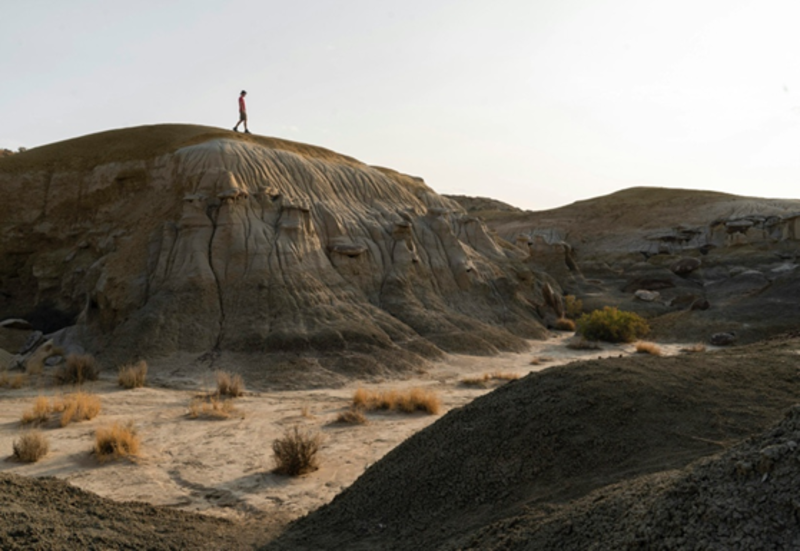
Photo by Intricate Explorer on unsplash
Karen Hollis | Feb 22, 2026 Lent 1 – Experiential Prayer
Different approaches to prayer:
Everyone has a unique approach to relationship with God and prayer. Our approaches go beyond denomination or even religion. Spiritual Directors, people who accompany individuals on their spiritual paths, will tell you that prayer is universal. You can tailor your particular prayer to Christianity, for instance, by maybe inviting Jesus in or engaging the Holy Spirit. There are many practices that were born out of a Christian context, and many have corollaries in other religions. Writing with a Christian context, Patricia Brown identifies 4 particular styles of prayer and offers prayer practices to support them. I’m not suggesting (nor is Brown suggesting) that she is the ultimate authority on this subject, rather we are both offering this content as a useful starting place. During this season of Lent, I’m inviting us to try this on, consider these different styles of prayer in the hopes that we each may resonate with something and have more tools for grounding ourselves as we walk through these challenging days.
(next slide)Here are 4 different personal styles of prayer:
Searching: brings a logical mind to prayer. Their insights come through observation, study, and debate or conversation.
Experiential Prayer: They appreciate a step-by-step approach, being in the present moment, and appreciate practices that have worked for others.
Relational: They look for personal meaning, prayer practices that help them attend to internal work, and aim for authenticity in both inner and outer life.
Innovative: They rejoice in new insights, imagination, creativity, and novelty. They make connections to deeper meaning, adapt and adopt traditions and rituals for prayer.
Today we consider the Experiential style: One who tends toward experiential prayer might find particular value in the tradition of their faith, and in observing significant occasions. One might gravitate toward gratitude and the beauty of creation. When in prayer, one might be fed by what is happening in the here-and-now, and look for opportunities to apply one’s faith in daily life as one works, plays, eats, and even sleeps. People who identify with an experiential approach are drawn to ways of praying that can be done in an orderly, step-by-step fashion. They have a deep appreciation for the history and theology of particular practices and are therefore keen observers of what has worked for others. Their prayer practices lean toward presence in the here-and-now, like breath prayer (brings us into the present), centering prayer (letting go of thoughts and resting in God’s presence), anointing (encountering God in the present), and fasting, which we will explore today, with the story of Jesus’ 40 days of fasting.
(next slide)
Before we hear the story of Jesus in the wilderness, let’s try a breath prayer together. This is something I’ve introduced before, so it’s not totally new and it’s very straight forward. I invite us to pray silently a simple phrase broken into 2 pieces – for the inhale and exhale.
Our phrase today is: open my heart to your love.
Let’s inhale: Open my heart,
exhale: to your love.
See if you can synchronize your prayer with your breath, so “open my heart” takes up your entire inhale, and “to your love” takes up your entire exhale. Let’s breathe this way for about 2 minutes – beginning and ending with the bell.
Matthew 4:1-11 Then Jesus was led up by the Spirit into the wilderness to be tested by the devil. He fasted forty days and forty nights, and afterward he was famished. The tempter came and said to him, “If you are the Son of God, command these stones to become loaves of bread.”
But Jesus answered, “It is written, ‘One does not live by bread alone, but by every word that comes from the mouth of God.’ ”
Then the devil took him to the holy city and placed him on the pinnacle of the temple, saying to him, “If you are the Son of God, throw yourself down, for it is written, ‘He will command his angels concerning you,’ and ‘On their hands they will bear you up, so that you will not dash your foot against a stone.’ ”
Jesus said to him, “Again it is written, ‘Do not put the Lord your God to the test.’ ”
Again, the devil took him to a very high mountain and showed him all the kingdoms of the world and their glory, and he said to him, “All these I will give you, if you will fall down and worship me.”
Then Jesus said to him, “Away with you, Satan! for it is written, ‘Worship the Lord your God, and serve only him.’ ” Then the devil left Jesus, and suddenly angels came and waited on him.
May the words of my mouth and the meditations of all our hearts be reflections of your word to us today, in Christ’s name we pray. Amen
Welcome to Lent. In true Lent fashion, I have already had several conversations about fasting. One person talked about giving up meat, another said they were fasting for Ash Wed, how many are giving up chocolate? The Pope made a speech the other day encouraging people to fast from words that are harmful to others. I’m grateful for the way he is using his power and his role on the world stage.
I haven’t done a lot of fasting in my life – a bit more fasting from speaking and interacting than from food. I was at a retreat over 20 years ago where we took 24 hours of fasting from food, speaking, interacting, and reading. I spent the day with my water and 3 pieces of fruit at a place called the Galleries on Gabriola Island, where water dripping down over millions of years, scooped out the rock face into a kind of covered porch, looking out over the water. It’s one of my favourite places in the world and so one might assume I enjoyed myself. I was actually pretty bored and spent a lot of time thinking about when I was going to eat. I reported to the group the next day that while I generally spend a lot of time in my own world with my imagination, when I was left with only myself, I wasn’t particularly drawn in . . . but I there I was.
While I’m obviously not an expert on fasting, I can appreciate the benefits of this practice when done with respect and reverence for one’s body, heart, and spirit.
While people are continuing to broadening their perspective on fasting, food is what most of us think of first. While food is obviously essential for sustaining our bodies, we can also, as we say, eat our feelings. Food can be a comfy barrier between us and truths that live deep down. Entering into a fast quickly clears out distractions and barriers, and we become aware of so much more. Some who teach this practice talk about fasting as a kind of meditation for the body. When we empty the body, we open to a new kind of receptivity, for some a new awareness of God’s presence and participation in our process.
Depending on how we enter into it, fasting can be an interesting exploration or a powerful healing experience. I entered into my short fast as a willing participant in someone else’s curriculum. I went in with openness and curiosity: “What will happen if I do this? What will I learn about myself or my relationship with God?” Someone else might go in with an intention to heal something specific or as a kind of rite of passage as they move into a new season of life.
The attitude with which we enter in is important. The fast is not about denying the body what it needs and using willpower to make it through. This kind of inner battle seems like its own kind of distraction and willpower is not often strong enough to sustain us, rather we might reach for something deeper.
As an alternative, one might consider the approach of The Rev. Matthew Wright (long time student of Cynthia Bourgeault) who writes: “When we fast there is . . . less energy for our bodies and even our mind, and we might find that we are more easily able to turn inward, to attend to that heart connection. It’s often said that a kind of sweetness opens within when we fast; that as there is less sweetness for the tongue, we find a different kind of honey, in the heart.”[1]
Fasting is a very here-and-now kind of practice – there is nowhere else to go. So, for those who are filled by engaging fully in the present moment, this can be a rich path of surrender and freedom and communion with God. Jesus, himself fasted. It was such a core part of his religious practice that he doesn’t tell us to fast, rather he assumes we already have a practice of fasting. He says during the Ash Wed reading: “when you fast, put oil on your head and wash your face, so that your fasting may be seen not by others but by your Abba God who is in secret” (Matthew 6:17).
Jesus emerges from the Jordan river at his baptism and is led deeper into the wilderness by the Spirit, for the fast that serves as his rite of passage into public ministry. The text says he fasts for 40 days and nights and, like any human would be, he is famished. His body and mind have little energy and he goes inward. He rests in the space of the heart, polishes the inner mirror, communes with God, and feasts on the sweet honey within.
And the shadows come one after the other. The devil, Diabolos, the slanderer, the one who opposes and pulls things apart, appears when Jesus is weakest in body and mind, though perhaps most aligned in heart.
And while he can’t avoid this encounter, Jesus can see the devil coming and recognizes it for what it is. While his logical mind could easily be convinced of his need for food, power, and testing God to make sure God’s promises are real, he can see the bigger picture, and that is perhaps the most important. He not only believes in the power of God’s presence in his life, he knows this presence is the center and source of his existence, and this presence provides him grounding during his fast. If there was any part of him that was unsure, the desert shows him and us who he truly is.
This practice of fasting – whether it is from food or anything else – is a well-traveled path. Removing the particular distractions that are clouding our view, help us to see more clearly and recognize the shadows for what they are . . . and expose the shadows to the light.
I shared on Ash Wed about my practice of radical self-love. I didn’t think about it this way, but practicing radical self-love is effectively fasting from self-criticism. But it’s not just removing something, it’s also grounding that fast with love. My practice of self-love was so effective at responding to my self-criticism that my psyche reached back to crunchy memories from my teenage years to remind me of how terrible I am, and it worked – it hooked me and I believed it. But then I was like – wait a minute – doesn’t the person I was as a teenager need self-love too? I see you, self-criticism. I see your game. Nope, you can keep trying, but I know that I’m worth loving.
So, this experiential prayer practice is one approach and one tool for healing, for knowing ourselves, for deepening relationship with God. This is a path that affirms that God’s love and presence are stronger than every shadow we find within. The shadows are tricky and persistent, but they don’t have anything on love. Thanks be to God.
[1] https://www.stthomaschilliwack.org/news/honey-for-the-heart