
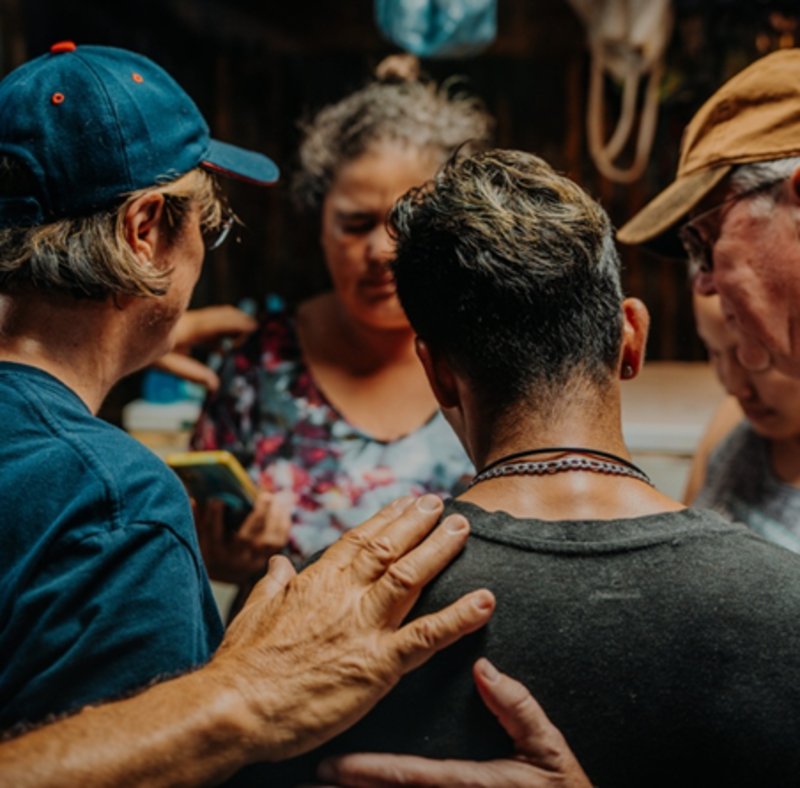
Photo by Elianna Gill on unsplash
Karen Hollis | Feb 1, 2026 Epiphany 4
The Prayer of Thanksgiving
This is the prayer they said:
We give thanks to you,
Every life and heart stretches toward you,
O name untroubled,
honoured with the name of God,
praised with the name of Father.
To everyone and everything
comes the kindness of the Father,
and love and desire.
And if there is a sweet and simple teaching,
it gifts us mind, word, and knowledge:
mind, that we may understand you;
word, that we may interpret you;
knowledge, that we may know you.
We rejoice and are enlightened by your knowledge.
We rejoice that you have taught us about yourself.
We rejoice that in the body
you have made us divine through your knowledge.
The thanksgiving of the human who reaches you
is this alone: that we know you.
We have known you,
O light of mind.
O light of life,
we have known you.
O womb pregnant with the nature of the Father,
we have known you.
O never-ending endurance of the Father who gives birth,
so we worship your goodness.
One wish we ask:
we wish to be protected in knowledge.
One protection we desire:
that we not stumble in this life.
When they said these things in prayer, they welcomed one another, and they went to eat their holy food, which had no blood in it.
Acts 2:41-42 Those who believed what Peter said were baptized and added to the church that day—about 3,000 in all. All the believers devoted themselves to the apostles’ teaching, and to fellowship, and to sharing in meals (including the Lord’s Supper), and to prayer.
May the words of my mouth and the meditations of all our hearts be reflections of your word to us today, in Christ’s name we pray. Amen
Since starting seminary 20 years ago, I have walked this path of discipleship with an ecumenical community of church leaders and Jesus followers. I was blessed to attend an ecumenical seminary, where I studied alongside students who were Baptist, Presbyterian, United Methodist, African Methodist Episcopal, Mennonite, Pentecostal, and so on. It was an incredibly rich environment for learning and growing. We used to practice gift exchange, where we would share with each other the most life-giving things about our denominations. Somewhere along the way, I realized just how much there is to celebrate about the way of Jesus. There is so much to practice and live into . . . there is much more than what one denomination or one community of faith can embody. I think the church is at its best when each community fully embraces who they are, while remaining in dialogue with other communities and practicing gift exchange. Similarly, we are at our worst when we silo ourselves or oppress each other with one right theology or practice . . . and plenty of that has been done over the years . . . most famously in the 4th century CE, at the first of the ecumenical councils, where the bishops began to establish the primary narrative and theology of Christianity. Soon after, the 27 texts of the New Testament were ratified. Along the way, other texts of the early Christian movement were destroyed, while some were protected and hidden away. Now that many texts have found the light of day again, it is much easier to see the diversity in the early Jesus movement, as well. They don’t appear to be formalized as denominations, though they were communities practicing the way of Jesus in their own distinct ways. Many of the new texts tell us about female leadership, describe a variety of theologies, and appear as everything from poetry, to narrative, to stream of consciousness.
Until now, our primary source for learning about the shape of the early Jesus movement has been Acts chapter 2. On the day of Pentecost, Peter offers a long sermon to everyone gathered. Acts says: “Those who believed what Peter said were baptized and added to the church that day—about 3,000 in all. All the believers devoted themselves to the apostles’ teaching, and to fellowship, and to sharing in meals (including the Lord’s Supper), and to prayer.” And while Paul’s letters mention several house churches around the Mediterranean, to learn more detail, we’ve always had to dig a bit. In the second century, a man named Justin Martyr wrote 2 apologies, or Christian doctrines. At the end of his first apology, he describes the shape of gatherings in his time and place. He writes: “on the day called Sunday, all who live in cities or in the country gather together to one place, and the memoirs of the apostles or the writings of the prophets are read, as long as time permits; then, when the reader has ceased, the president verbally instructs, and exhorts to the imitation of these good things. Then we all rise together and pray, and . . . when our prayer is ended, bread and wine and water are brought, and the president in like manner offers prayers and thanksgivings, according to his ability, and the people assent, saying Amen; and there is a distribution to each . . . And they who are well to do, and willing, give what each thinks fit; and what is collected is deposited with the president, who [supports] the orphans and widows . . . and in a word takes care of all who are in need.1
Isn’t that amazing to hear?! What is most amazing to me is how similar this description is to what we do today. There’s a similar pattern: first they gather, then they lift up sacred texts; they respond to the word through collective prayer, celebrating communion, and offering what we have to share. Nearly 2000 years between us and we still share this pattern of worship.
So, when I read the Prayer of Thanksgiving, this is what immediately came to mind. A community at their Sunday gathering. As I continued to read, I learned that this prayer, and prayers with very similar language, actually appear in a variety of different contexts.
Did you notice the prayer gives us a few hints about how it was used (at least in one context)? The text begins with: “This is the prayer they said:” . . . Who are “they”? Who are these disciples? Were they few or many? Was there a range of ages and genders? What led up to the prayer? Was it a special occasion or regular practice? Did they gather on Sundays from the city and country, or did they live together in a space set apart?
After the prayer the text says: “When they said these things in prayer, they welcomed one another, and they went to eat their holy food, which had no blood in it.”
It’s almost like it was their practice to pray these words before they did anything else. Perhaps these were the words that first grounded and centered them and reminded them of their purpose. The prayer came first, followed by a practice of welcome and eating together.
Through another lens, this prayer could be what we would call the Prayer of Great Thanksgiving in preparation for communion. The Greek word Eucharist, which is another word for our communion practice, literally means thanksgiving. Before the formula of the communion prayer was established by the church, the way in which the disciples gave thanks before sharing the bread, cup and other food that was provided, may have been quite varied and organic. The reference to a bloodless meal reminds us of the connection to Judaism in these early communities of Jesus followers and their observance of kosher dietary laws.2
The prayer itself is particularly focused on the knowledge of God, which isn’t necessarily knowledge that we already have. The Greek and Coptic words translated here invite us to give thanks for knowledge that continually emerges, that we become acquainted with over time. This idea fits my own experience of relationship with God – perhaps it does for you too - where there is a kind of perpetual unfolding or blooming of God’s presence that develops in us with time and attention.
The prayer even characterizes this continued emergence as birthing. This is a lovely example of the kind of “gender fluidity” that is so common in these texts that weren’t included in the Bible. Here, the Father has a womb and is pregnant with the nature of the Father – it’s a remarkable image for our post-modern imaginations. The text seems unconcerned with the fluidity of genders here, and simply celebrates this phenomenon of God’s emerging newness.
As I work through the prayer, I see a lovely expression of mutuality - just as we reach for God, God comes to us and is for us. At the heart of the matter, there is a sweet, simple teaching that connects us to God in mind, heart, and body. There is an invitation to pray that we may not only sense God, but interpret God and know God through God’s emerging presence, through the eternal self-birthing of God in the world. After-all-this praise and gratitude, at the very end of the prayer, a brief petition . . . God help us to be true to ourselves and to you in this life.
It’s an astoundingly beautiful prayer.
I can imagine gathering around the table, giving thanks in this way for God’s presence that, with time and attention, becomes as real and rich for us as bread and juice . . . following the example of Jesus, who also gave thanks for God’s very real presence among us.
I am grateful to those who protected this text, translated and published it so that we, too, could learn it and perhaps one day, claim it as our own.
1 Apology of Justin Martyr: Chapter 6
2 A New New Testament. Hal Taussig. 5.