
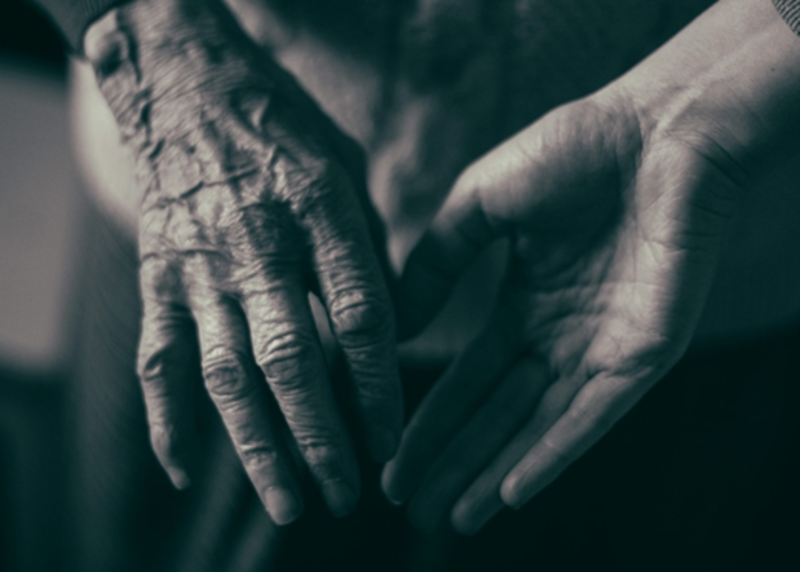
Photo by Ga on unsplash
Karen Hollis | Dec 7, 2025 Advent 2 | Peace
Matthew 3:1-6: In those days John the Baptist came to the Judean wilderness and began preaching. His message was, “Repent of your sins and turn to God, for the Kingdom of Heaven is near.” The prophet Isaiah was speaking about John when he said, “He is a voice shouting in the wilderness, ‘Prepare the way for the Lord’s coming! Clear the road for him!’” John’s clothes were woven from coarse camel hair, and he wore a leather belt around his waist. For food he ate locusts and wild honey. People from Jerusalem and from all of Judea and all over the Jordan Valley went out to see and hear John. And when they confessed their sins, he baptized them in the Jordan River.
May the words of my mouth and the meditations of all our hearts be reflections of your word to us today, in Christ’s name we pray. Amen
At Taizé this week I was reminded of my favourite Mary Oliver poem: You do not have to be good. You do not have to walk on your knees for a hundred miles through the desert, repenting. You only have to let the soft animal of your body love what it loves. What does your body love? My body loves walking. My body loves being warm. My body loves celery. Can’t get enough of it. What does your body love? Could turning toward God again (which is the actual definition of repentance) be as simple as reconnecting with our own bodies and asking: what do you love? Gosh, it seems like a simple question, but as I settle into it, I realize that question is a whole world.
I was at a retreat years ago in early summer. We slept in a simple cabin and spent a lot of time outside, cooking, gathering together, and reflecting. There was a small yet deep pool of water off the river that people were using as a swimming hole. At that time I did not do cold water, but I knew I needed to get in. After a year of turbulent relationship between my body and me, things were finally beginning to shift, and I saw in the swimming
hole an invitation to ritual . . . to bring body, mind, and spirit together in an affirmation of the way forward. I got brave enough to name my need and a couple of friends came with me to the swimming hole. I managed to jump in with them, head and all. I surfaced with one of those inhales that goes on forever as the cold sucked the warmth from my body. On another level, the water brought me right back to myself. Call it a ritual or baptism or healing, I just know I climbed up the roots and soil to the shore, feeling whole.
I talk each week about peace as healing, wholeness and reconciliation. This is Shalom, the Hebrew word for peace. It refers to things like a stone or a brick wall without cracks in it, a human being, or anything in life that is complex. When things get out of alignment or pieces are missing, Shalom breaks down and needs to be restored. In a sense, Shalom is a verb; it’s about that practice of healing and making whole.1
For us humans, living in physical bodies, the journey toward wholeness is lifelong. The feeling of wholeness comes and goes – it’s not a static state; it’s more of a dance. Sometimes inhabiting the body is joyful and full of connection and energy. At other times, one’s body might feel like a stranger miles away or a shadow of the self with aches and pain. Our bodies not only carry us around, they also hold onto our memories and they don’t know how to lie. We are complex . . . there’s a lot going on in us, and we all know the courage it takes to turn toward our bodies and listen . . . listen to their unique language, to hear their experience and for what they love and long. Every sensation, every instinct, every ache and pain, every motion has a story to tell.
In a commentary, theologian Nichola Torbett offers a little meditation on a river, which I’ve turned into an imaginative exercise – as you follow along, I invite you to find yourself within the story: “One day, your life changes because you meet a river—not just meet it but enter into it, experience it nudging you, roiling all around you, chilling and thrilling you at once. You feel the mud beneath your feet . . . you feel how easy it would be to lift your legs and be carried by it, tossed and tumbled. Maybe that’s not a good idea, to give up control like that. Maybe it would get out of hand.”2 I wonder, could it also be its own kind of gift? The experience is perhaps mixed . . . you feel exposed and bare, while something deeper says ‘stay with it.’ Maybe the river could carry you to places it’s difficult to go on our own. Maybe it could immerse you in your own healing.
Maybe as you experience the river, you recognize it as your elder, as one who has lived there since time immemorial, flowing with Creation’s wisdom and the history of your people, welcoming you in with all that you bring. Call it a ritual or baptism or healing . . . it’s all there for you.
“You step out of the river different than you waded in.”3 Perhaps on the shore you find food prepared – you sample some figs and wild honey, take a big bite of fresh bread, and a long refreshing drink. Maybe your taste buds come alive with the flavours and, as the food fills your belly, you drop into your body in a new way. Maybe as you drop in, there’s also a lifting up.
You look around and see others like you, hair still soaked with blessings and finding themselves in the embodied present. Perhaps it’s the Holy Spirit who breathes through the group, and gathers our attention, gathers us as one, here on the riverbank – the Jordan or the Puntledge. Echoes of “prepare the way of the Lord” reverberate throughout the land, as we check in with our Shalom. We listen to our bodies, listen for what draws them in love, and sense the presence of the Holy One. Within the gathering, within the denseness of matter, there is a lightness and expansiveness, a sense of gratitude, and a newfound spaciousness for possibility.
We join hands, extending one hand to another with an offering friendship and fellowship, companionship and care for the journey that takes us together into the great unknown. We proceed in the embodied holy presence that leads the way to God enfleshed, to Christ’s birth in and through us again. Thanks be to God.
1 The Bible Project: Peace
2 Nichola Torbett, enfleshed Dec 4, 2022.
3 Nichola Torbett, enfleshed Dec 4, 202